



Written by Wang Cong
Editor: Wang Duoyu
Question picture! Pixabay
Colorectal cancer (CRC) is the third and second highest in cancer incidence and mortality, respectively.2D in vitro cell culture model has been widely used for the study of cellular and molecular mechanisms of colorectal cancer, at the same time, 3D culture technology based on organoids in recent years, it can pass some realistic microanatomical characteristics of colorectal cancer and cell-cell interaction and cell-matrix interaction into the in vitro environment. Despite these efforts, in vitro models of colorectal cancer so far have had relatively limited translation success in clinical scenarios, suggesting that the nature of the current in vitro system is still too simplistic.
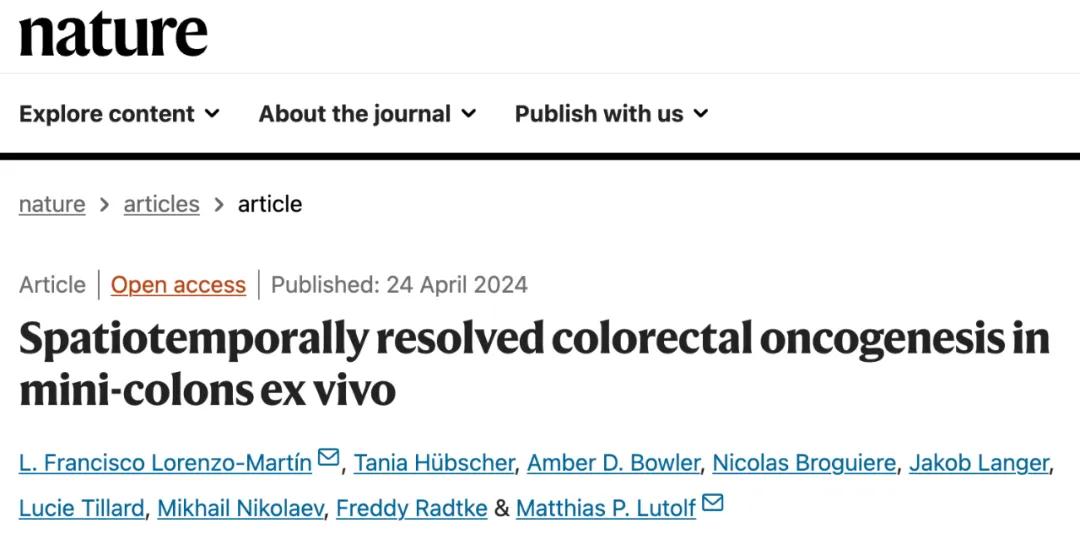
In April 2024, researchers at the Federal Institute of Technology in Lausanne published a research paper entitled: Spatiotemporally resolved colorectal oncogenesis in mini-colons ex vivo [1], which successfully developed a complex topological colon, which can induce tumorigenesis in vitro by integrating microfabrication, optogenetics and tissue engineering methods. Using this system, guiding oncogenic activation by blue light irradiation allows spatiotemporal control of oncorigenic transformation, and enables real-time tracking of emerging colon tumors for up to several weeks at single-cell resolution without disrupting culture.
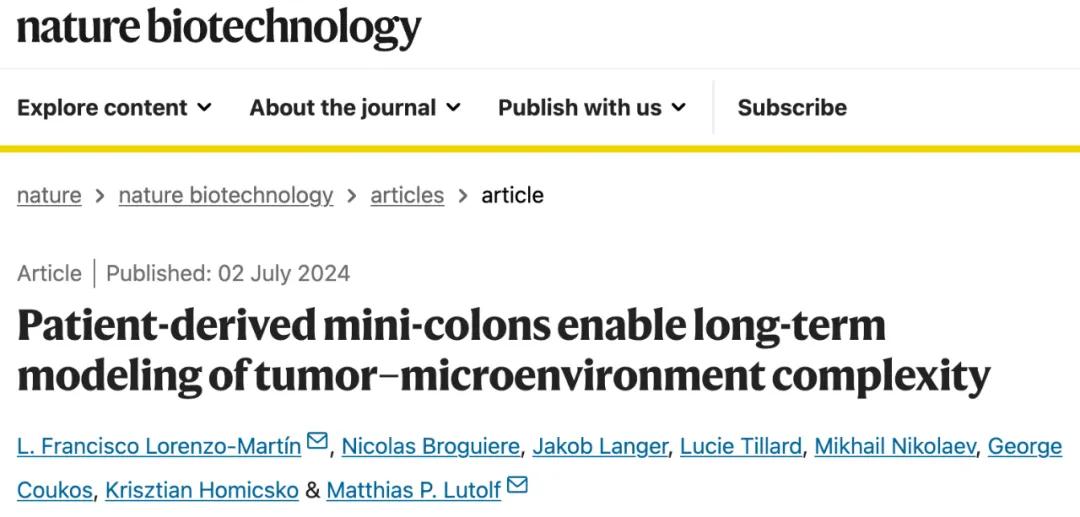
In July 2024, researchers at the Federal Institute of Technology in Lausanne further published a research paper entitled: Patient-derived mini-colons enable long-term modeling of tumor microenvironment complexity in the Nature Biotechnology journal.
Developing a next-generation patient-derived organoid —— 'mini-colon', which can simulate colorectal tumor dynamics and studies the interactions of cells in the tumor native microenvironment at high resolution, this next-generation organoid provides a wealth of new experimental opportunities that drive the cutting-edge of cancer modeling in multiple directions.
Among the factors under the current in vitro models, the poor reappearance of extra-tumor factors topped the list. Stromal composition, immune cell infiltration, vascularization, and mechanical signaling are well-known modulators of colorectal cancer behavior in vivo. In vitro modeling of these factors requires a balanced co-culture of cancer cells with autologous cancer-associated fibroblasts (CAF), tumor-infiltrating lymphocytes (TIL), and other components of the tumor microenvironment (TME).
This multicellular interaction is necessarily reproduced in a healthy colonic environment, as tumor structure, dynamics, and adaptability are shaped by competition with normal epithelial cells. Since all these interactions develop and reshape over time, evaluation of them also requires long-lived tissues that can remain stable for several weeks. The closed spherical structure of conventional organoids and the inadequate extracellular environment prohibit all these possibilities. Although attempts have been made to overcome these limitations using microfluidic and bioprinting approaches, all-around solutions with topological biological relevance are still lacking.
These limitations highlight the need to develop advanced systems that are better able to model colorectal cancer (CRC) and its tumor microenvironment (TME). To address these issues, the research team integrated microfabrication and tissue engineering techniques to develop complex patient-specific models known as the colorectal cancer "mini-colon"."
These mini-tissues are composed of long-lived and topologically relevant healthy colon epithelium, with human intestinal shape and can reproduce the formation and progression of colorectal tumors, stably integrated cancer cells and their native tumor microenvironment, and high resolution assessment of tumor microenvironment interactions in colorectal cancer.
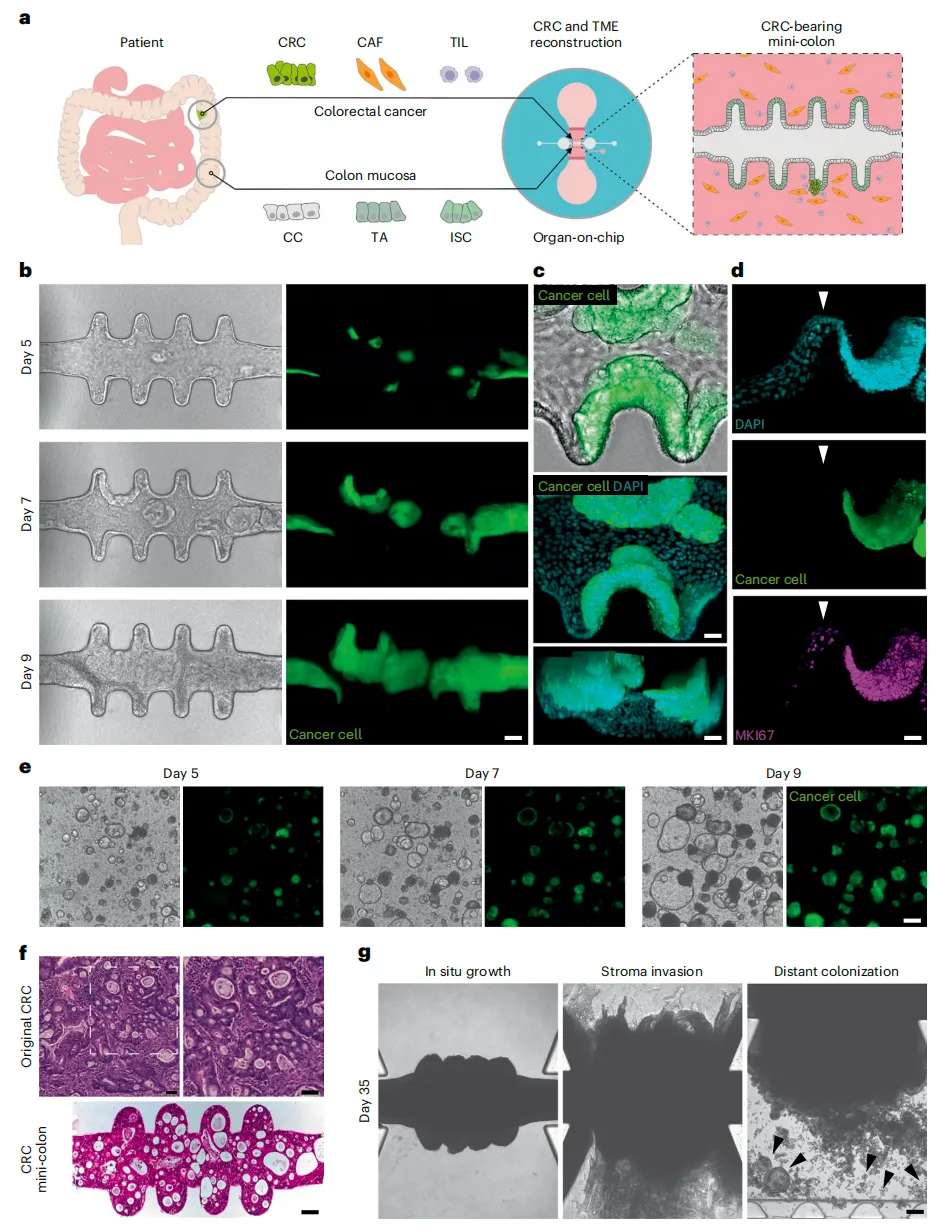
Colorectal cancer (CRC) cells recapitulate patient-specific tumor dynamics in the mini-colon
The team also further demonstrated the versatility of the mini-colonic system and its major advantages over conventional organoids:
1) Developed a comprehensive preclinical model for the long-term assessment of the efficacy and toxicity of cancer drugs;
2) Reveal a mechanism mediated by cancer-associated fibroblasts (CAF) driving epithelial-to-stromal transition (EMT) and aggressiveness in colorectal cancer;
3) Establish a multicellular type platform for assessing the tumor microenvironment (TME) -mediated immune escape and immunotherapy strategies for colorectal cancer.
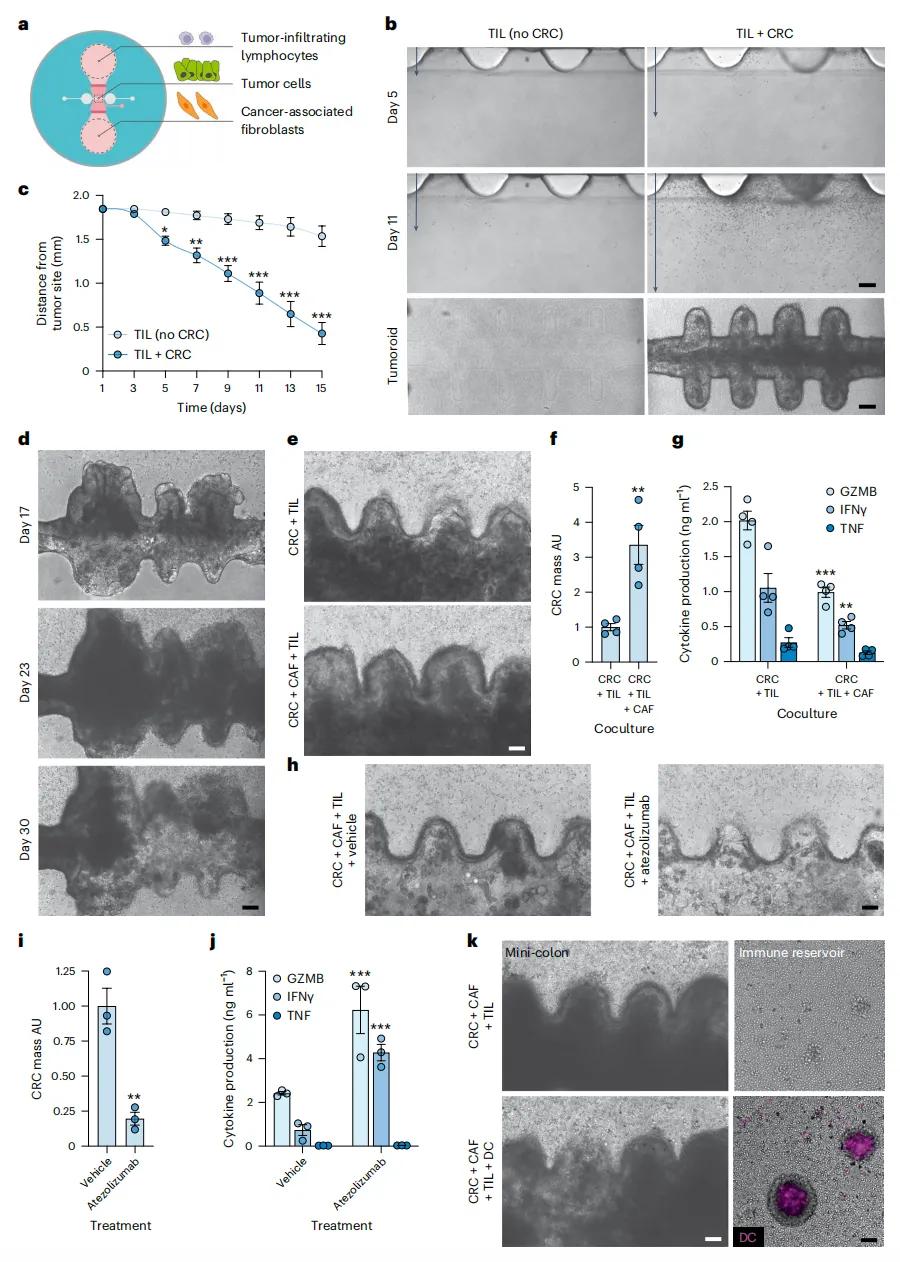
The mini-colon can reconstitute the immunomodulatory interactions between CRC, CAF, and TIL
The team also said the approach should be feasible for different tumor types.
Paper link:
https://www.nature.com/articles/s41587-024-02301-4
The company's product recommendation:
1.73781-88-1 https://www.bicbiotech.com/product_detail.php?id=5390
2.7144-05-0 https://www.bicbiotech.com/product_detail.php?id=5391
3.89793-12-4 https://www.bicbiotech.com/product_detail.php?id=5392
4.19012-03-4 https://www.bicbiotech.com/product_detail.php?id=5393
5.62802-42-0 https://www.bicbiotech.com/product_detail.php?id=2642