


In the review article "Extracellular Vesicle-Based Drug Overview: Research Landscape, Quality Control, and Non-Clinical Evaluation Strategies" published in the journal *Signal Transduction and Targeted Therapy* on August 14,2025, a research team from the China National Institutes for Food and Drug Control, the First Hospital of Jilin University, and other institutions systematically reviewed the research progress, quality control, and non-clinical evaluation strategies for extracellular vesicle (EV) drugs.
This review focuses on EV from mammalian cells, aiming to provide reference for the development and evaluation of EV drugs, accelerate their clinical transformation, and ultimately benefit patients.
The team led by Academician Wang Junzhi from the China National Institutes for Food and Drug Control summarized the current status of clinical translation and process development research on EVs drugs, and proposed quality control strategies and non-clinical evaluations, aiming to provide references for the development and evaluation of EVs products.
What are extracellular vesicles?
Extracellular vesicles (EVs) are small, phospholipid bilayer-structured particles released by cells that cannot replicate autonomously. They are primarily categorized into microvesicles and exosomes. Microvesicles, measuring 30-150nm in diameter, are formed and released by directly enveloping cellular contents within the cell membrane. Exosomes, ranging from 100-1000nm in size, are released through endosomal-membrane fusion following endocytosis. Given their highly similar structures and components, along with the difficulty in strict differentiation, the International Society for Extracellular Vesicles (ISEV) recommends adopting the unified term "extracellular vesicles (EVs)" for both.
Extracellular vesicles (EVs) possess membrane structures similar to their parent cells, rich in sphingolipids, cholesterol, phospholipids, and membrane proteins. Their interiors contain bioactive substances such as proteins, RNA, and DNA. This unique property enables EVs to act like "biological couriers" – targeting specific cells through surface markers and delivering active molecules to recipient cells to regulate physiological functions. This dual functionality grants EVs significant therapeutic value: they can serve as natural therapeutic agents to directly combat inflammation and tissue repair, while also functioning as drug delivery systems that encapsulate small-molecule drugs and nucleic acids for precise targeting to disease sites.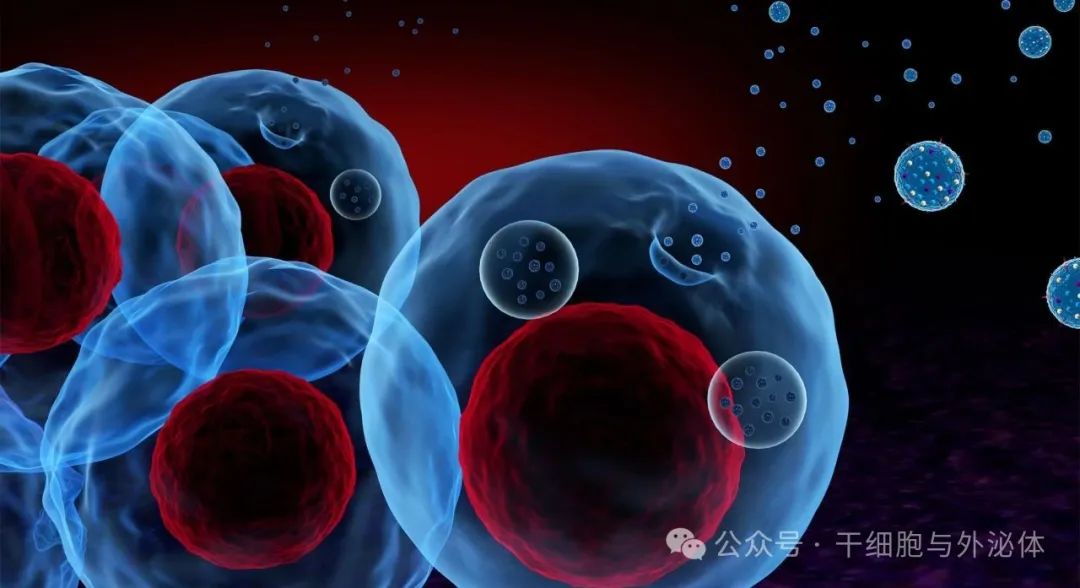
Figure: Extracellular vesicles
Research status and application potential of EV drugs
Research on extracellular vesicles (EVs) has evolved from the early understanding of "cellular metabolic waste" to become a cutting-edge therapeutic approach. In 2013, scientists were awarded the Nobel Prize in Physiology or Medicine for their discovery of EV transport and regulatory mechanisms, which significantly advanced the recognition of EVs as "intercellular messengers". Currently, over 100 clinical trials worldwide are evaluating the efficacy of EV-based drugs in treating respiratory diseases, neurological disorders, severe inflammation, and cancer.
In terms of sources, EV drugs can be divided into two categories: natural EV and engineered EV. Natural EV mainly comes from mammalian cells, milk and plants:
Exosomes (EVs) derived from mesenchymal stem cells (MSCs) are the most extensively studied type, exhibiting anti-inflammatory, immunomodulatory, and tissue repair functions. They have demonstrated therapeutic potential in treating multi-organ injuries such as lung, liver, and kidney damage, with industrial-scale production approaches now achievable. Neural stem cell-derived EVs, rich in neuro-specific miRNAs, show advantages in treating neurological disorders like stroke and Alzheimer's disease, though they face ethical controversies and challenges in large-scale cultivation. Milk-derived EVs possess multiple bioactive properties including anti-inflammatory and antioxidant effects, along with high stability for oral administration, making them promising candidates for managing intestinal inflammation and hepatic fibrosis. Plant-based EVs (e.g., those from ginger, oranges, and cabbage) are gaining attention in cancer and inflammatory therapies due to their low cost and minimal immunogenicity, though purification processes remain complex and target specificity requires further validation.
Engineered extracellular vesicles (EVs) are modified through genetic, physical, or chemical methods to enhance drug-loading capacity and targeting efficiency. For instance, surface modification with targeting peptides can improve their recognition of tumor cells, while loading siRNA or chemotherapeutic drugs can boost cancer treatment efficacy. Although engineered EVs are currently in the research phase, they are considered to have greater clinical application potential compared to natural EVs.
Clinical translation progress and challenges
In clinical applications, extracellular vesicles (EVs) have achieved phased milestones. In 2022, a study using mesenchymal stem cell-derived EVs via nebulization inhalation demonstrated favorable safety in treating severe COVID-19 patients. In 2023, the Phase II clinical trial of ExoFlo drug for moderate-to-severe COVID-19-associated acute respiratory distress syndrome (ARDS) reduced the 60-day mortality rate by 30.8%. In the field of neurological disorders, the U.S. FDA approved AB126—an EV-based drug derived from neural cells—for clinical trials in 2024, targeting neurodegenerative diseases.
However, the clinical translation of EV-based drugs still faces multiple challenges. Technologically, large-scale production processes remain underdeveloped, resulting in low yields and significant batch-to-batch variations. Additionally, the efficiency and precision of engineering modifications need improvement, as exogenous drug loading may disrupt the structural integrity of EVs.
At the regulatory level, there are currently no specialized technical guidelines for EV drugs globally, with unclear product definitions, classifications, and quality control standards. Furthermore, the complex mechanisms of action of EVs, along with incomplete elucidation of their active ingredients and potential side effects, pose challenges for preclinical research and evaluation.
Quality control and non-clinical research points
To advance the standardized development of EV-based pharmaceuticals, this review proposes a systematic quality control strategy. Regarding production materials, strict management is required for cell sources, culture medium components, and engineered materials such as plasmids and viruses used in modification processes. Priority should be given to using materials without animal-derived components to minimize contamination risks.
In the production process, it is necessary to clarify the key process parameters, such as the temperature and pH value of cell culture, as well as the centrifugation speed and time of purification steps, to ensure the stability of EV yield and quality.
In terms of EV drug characterization, indicators such as surface markers (e.g., CD9 and CD63), particle size distribution, concentration, morphology, composition analysis and biological activity should be evaluated.
For example, particle size and concentration can be measured by nanoparticle tracking analysis (NTA), morphology can be observed by transmission electron microscopy, and anti-inflammatory or pro-repair capabilities can be verified through functional experiments. For engineered EVs, additional parameters such as drug encapsulation efficiency and loading capacity should also be evaluated.
Non-clinical research must prioritize three critical aspects: animal model selection, drug delivery mechanisms, and safety evaluation. Animal models should closely mimic clinical disease conditions, such as using genetically modified mice to study Alzheimer's disease. Drug delivery methods must align with clinical protocols – intravenous administration for systemic diseases versus aerosol inhalation for pulmonary disorders. Safety assessments must focus on potential risks including immunogenicity, neurotoxicity, and tumorigenicity to ensure the safe clinical use of evi (evolutionary variants).
future expectations
Despite numerous challenges, EV-based drugs have emerged as a crucial direction for innovative therapies due to their unique advantages such as low immunogenicity and high targeting efficiency. With advancements in engineering technologies (e.g., gene-editing modifications to target molecules on EV surfaces), optimized production processes (e.g., 3D cell culture for increased yields), and improved regulatory frameworks, EV drugs are expected to gain more clinical approvals within the next decade.
As highlighted in the review, the development of evolde drugs requires collaborative efforts among basic research, industry, and regulatory bodies. By establishing standardized quality control systems and non-clinical evaluation methods to address critical challenges such as production scaling and elucidation of mechanisms of action, evolde drugs will bring new therapeutic hope to patients with refractory diseases and usher in a new chapter of precision medicine.
Source: [Stem Cells and Exosomes]
Disclaimer: This article is only for the purpose of knowledge exchange and sharing and popular science, does not involve commercial publicity, and is not as relevant medical guidance or medication advice. If there is any infringement, please contact us to delete.
Our products are recommended:
1.2201058-77-5 https://www.bicbiotech.com/product_detail.php?id=6384
2.2201057-79-4 https://www.bicbiotech.com/product_detail.php?id=6385
3.2201057-80-7 https://www.bicbiotech.com/product_detail.php?id=6386
4.2201057-82-9 https://www.bicbiotech.com/product_detail.php?id=6387
5.2201056-62-2 https://www.bicbiotech.com/product_detail.php?id=6388