


The 11th National Organized Drug Procurement has recently released its results, covering 55 medications across common therapeutic areas including anti-infective, anti-allergic, anti-tumor, blood sugar control, blood pressure reduction, lipid-lowering, and anti-inflammatory pain relief. Nationwide, 46,000 medical institutions participated in the bidding process, with 445 companies submitting bids for 794 products. Ultimately, 453 products from 272 companies were shortlisted for potential selection. Guided by the principles of "stabilizing clinical use, ensuring quality, preventing bid rigging, and combating internal competition," this procurement cycle notably featured the first appearance of the internet buzzword "anti-internal competition" in national drug procurement.
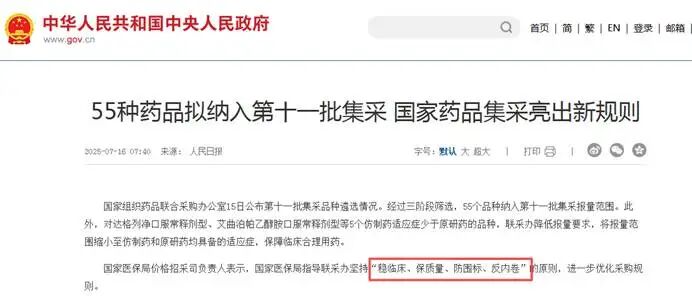

Those with decades of experience in centralized procurement have witnessed the system's evolution from initial exploration to maturity. Since the 2018 "4+7" pilot program, China's national volume-based drug procurement initiative has been hailed as a "supply-side reform" in the pharmaceutical industry, fundamentally transforming drug pricing mechanisms through bulk purchasing. To date, the first ten batches have covered 435 drug varieties, saving patients over 500 billion yuan while compelling the industry to shift from profit-driven, high-margin marketing to cost-efficiency and innovation-focused strategies. However, as the system progresses, issues have become increasingly apparent. Some companies engage in reckless pricing and cutthroat competition, not only undermining policy effectiveness but also jeopardizing the industry's long-term development.
So, where does the emphasis on "anti-internal competition" in this centralized procurement initiative come from? Why is it necessary to combat such internal competition? In recent years, centralized procurement has seen a trend of "price-only competition," where some companies bid below cost to capture market share. While this may seem like a short-term benefit for patients, it actually carries significant risks. Excessively low prices force companies to either cut supplies or compromise quality, ultimately leaving patients to bear the consequences. I once witnessed a company that, after being selected through centralized procurement, could not sustain normal production due to excessively low prices, leading to drug shortages in certain regions and causing real impacts on patient treatment.
Moreover, if companies are constantly focused on price-cutting, how can they afford R&D? While centralized procurement primarily targets generic drugs and doesn't directly regulate new medications, severely squeezing profit margins across the industry will inevitably hinder innovation. Although pharmaceutical R&D investments have increased, most funding still concentrates in leading innovator firms, leaving smaller companies struggling to keep pace. The recent "anti-internal competition" policy specifically addresses these systemic challenges.
How exactly is this implemented? The reforms focus on three key aspects. First, the "anchor point" for price spread control has been revised, shifting focus away from minimum bid prices. The National Healthcare Security Administration (NHSA) simulated pricing for over 200 drug varieties from previous batches using new rules. It found that in 25% of cases where bid spreads exceeded 1.8 times the difference between highest and lowest bids, the "anchor point" was automatically adjusted upward, preventing excessive price distortions. Second, manufacturers are prohibited from quoting below cost. If bids fall below the "anchor price," companies must clearly explain their cost calculations, detailing production costs, expenses, and profit margins. This addresses public concerns about quality risks in low-cost drugs. Third, a dual recovery mechanism and volume caps have been introduced. The recovery mechanism reduces the likelihood of companies being eliminated due to single-bid errors, while the volume caps limit each selected manufacturer to 50% of the total supply for any given drug. This prevents monopolistic dominance, ensuring alternative suppliers can step in if one company faces issues, significantly reducing drug supply disruptions.
These adjustments aren't about raising drug prices, but about striking a balance between helping patients save money and ensuring medication quality. Who doesn't want cheaper drugs? But only if they're effective and safe. The repeated revisions to centralized procurement rules ultimately aim to address both the high cost of medical care and ensure medication safety, staying true to the original purpose of medical insurance in protecting public health.
The anti-internal competition policy is driving the industry toward higher quality standards. While China has numerous pharmaceutical companies, most operate on a small scale with limited innovation capabilities, often relying on generic drug sales for quick profits. By eliminating inefficient production capacities through this policy, resources can be reallocated to encourage companies to invest in new drug development, upgrade manufacturing processes, and improve product quality. In the long run, this industry revitalization will enable patients to access better medications, creating a win-win scenario for all stakeholders.
Beyond addressing internal competition, this centralized procurement initiative has introduced new measures to stabilize clinical practices, ensure quality standards, and prevent bid rigging. In terms of clinical stability, hospitals previously had to submit quantity requests using generic drug names. Now they can choose between generic names or specific brand names. Hospitals can select the brand that performs better and is recognized by both doctors and patients, making the selected results more aligned with actual needs. This time, 77% of the 46,000 hospitals submitted brand-specific quantity requests, demonstrating that this reform truly resonates with hospital priorities.

The quality control threshold has been significantly raised. Bidders or their contracted manufacturers must demonstrate at least two years of experience in producing similar drug formulations, with production lines passing GMP inspections. Previously, the requirement only covered whether the submitted drugs had violated GMP standards within the past two years. Now, the scope has been expanded to include production lines, tightening quality control from the source.

To combat bid rigging, authorities will continue to regulate affiliated enterprises. This includes companies with equity ties, management connections, or those that have transferred registration approvals or commissioned production. The policy also introduces a "first-report leniency" provision: entities that first provide evidence of bid rigging or voluntarily confess to such practices will receive lenient penalties. This measure significantly increases the difficulty for groups to manipulate prices through coordinated pricing by affiliated companies.

Looking deeper, the reforms in the 11th batch of centralized drug procurement have tripled benefits for patients: affordable medications with guaranteed quality, ensuring safer and fairer access to medicines. For pharmaceutical companies, this eliminates the need to engage in cutthroat price competition, allowing them to reinvest resources into R&D and drive healthier industry innovation. For the medical insurance fund, it achieves cost efficiency while maintaining high operational effectiveness, supporting ongoing healthcare reform initiatives. This transformation didn't happen overnight – it evolved through gradual optimization and experience accumulation from the first ten batches of centralized procurement.
Of course, the centralized procurement rules aren't perfect yet. Some argue that the current competition in generic drug markets is already intense, with dozens of companies vying for a single drug product. Simply changing rules during procurement might not be enough to curb this cutthroat competition. To ensure quality and stable supply of selected drugs, coordinated efforts from upstream and downstream industries are essential. For instance, after selection, quality control must remain vigilant throughout the entire process – raw materials, production methods, and clinical efficacy should all undergo random inspections. Additionally, incentive policies could be implemented, such as prioritizing companies with exceptional quality standards, encouraging them to shift from "passively cutting costs" to "actively improving quality."
More crucially, all policies must prioritize health outcomes to ensure the benefits of centralized procurement reach more people. Whether establishing rules or implementing them, we should actively seek input from doctors and patients. For instance, when calculating procurement volumes, we shouldn't focus solely on price reductions but must also consider actual clinical demand and patient satisfaction. When evaluating quality, clinical data should be the primary reference, letting therapeutic effectiveness speak for itself.
Looking back, the optimizations in the 11th batch of centralized procurement not only resolved longstanding issues from the previous ten batches, but also demonstrate the system's evolution toward greater maturity and refinement. The essence of combating internal competition lies in eliminating inefficient and low-quality production capacities, redirecting resources to more productive uses, and cultivating a market environment conducive to innovation rather than merely engaging in price wars. Over the years, centralized procurement has played a significant role in clearing gray areas in pharmaceutical distribution and standardizing market practices. However, implementing these measures requires precision, tailored problem-solving approaches, patient attention to detail, and empathy for enterprises' operational challenges.
The results of the 11th National Centralized Drug Procurement Program have been officially announced, with these medications expected to become available nationwide by February 2026. This milestone not only marks the launch of new drugs but also signifies the implementation of innovative regulatory frameworks. Many public health initiatives, like centralized procurement, follow a cyclical process of experimentation and refinement. Through continuous improvement, we can achieve better outcomes. As these systems evolve, we anticipate increasingly sophisticated regulations that will not only enhance public health protection but also inject fresh momentum into the pharmaceutical industry, ultimately ensuring accessible, safe, and affordable medications for all.
Reference information:
1. People's Daily.55 Drugs Proposed for 11th National Centralized Procurement Round; New Rules Revealed for National Drug Procurement
2. Luonan. A live report on the bidding site: How will the new regulations for the 11th batch of national drug procurement affect the market? China Food and Drug Network.
3. Ding Ning. The drug centralized procurement system first proposed anti-internal competition, no longer solely focusing on low prices, and added "revival for non-listed drugs". China.com Finance.
4. National Healthcare Security Administration: The centralized procurement has achieved the expected goals of stabilizing clinical services, ensuring quality, curbing internal competition, and preventing bid rigging. Beijing Business Daily.
5. Health monitoring. The bidding for the 11th batch of national drug procurement was conducted, with competition intensity far exceeding that of the previous ten batches.
6. The eleventh batch of national centralized procurement regulations was released: optimize anchor points to prevent internal competition and strengthen quality control to ensure supply. Shanghai Securities News·China Securities Network.
Disclaimer: This article is intended solely for knowledge exchange, sharing, and popular science purposes. It does not constitute commercial promotion or serve as medical guidance or medication advice. If any content infringes on your rights, please contact us for removal.
Product recommendations:
1.61533-68-4 https://www.bicbiotech.com/product_detail.php?id=6434
2.3603-07-4 https://www.bicbiotech.com/product_detail.php?id=6435
3.1945948-65-1 https://www.bicbiotech.com/product_detail.php?id=6436
4.339-44-6 https://www.bicbiotech.com/product_detail.php?id=6437
5.3459-20-9 https://www.bicbiotech.com/product_detail.php?id=6438