


Liver fibrosis is a common feature of various advanced chronic liver diseases. As the fibrotic process progresses, it may lead to cirrhosis and even hepatocellular carcinoma. Therefore, reversing liver fibrosis is of significant importance for improving patients' quality of life and prolonging survival. Although effective treatments for liver fibrosis remain limited, several drugs have entered clinical trial stages. This article summarizes novel targets and therapies for liver fibrosis based on relevant literature and databases, providing a reference for researchers.
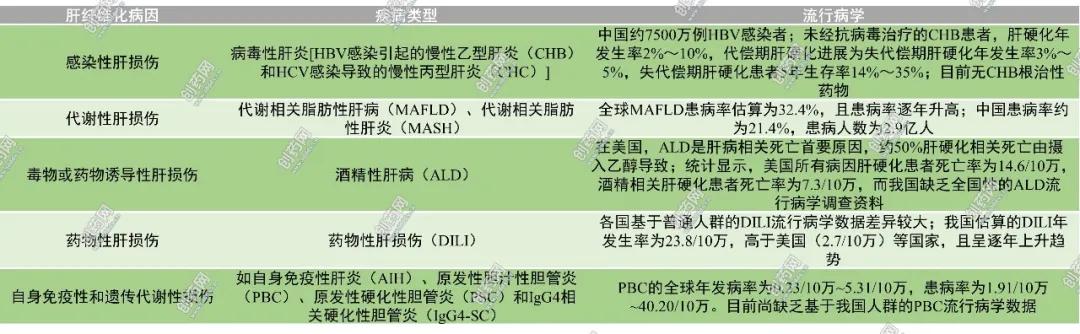
Liver fibrosis is a chronic pathological condition characterized primarily by the activation of hepatic stellate cells (HSCs) and excessive deposition of extracellular matrix. Globally, approximately 2 million people die from liver diseases annually, accounting for 4% of total deaths, with the majority succumbing to chronic liver disease and its complications. In China, there are approximately 390 million patients with chronic liver diseases such as chronic hepatitis B and cirrhosis, reflecting a significant burden of liver disorders. Liver fibrosis typically occurs following prolonged liver injury, with chronic viral hepatitis being the most common etiology in China. In recent years, non-viral liver diseases—such as metabolic-associated fatty liver disease (MAFLD)—have shown an increasing trend in inducing liver fibrosis. If left untreated, progressive liver fibrosis may advance to cirrhosis or hepatocellular carcinoma (HCC). In China, HCC ranks as the fourth most prevalent cancer and the second leading cause of cancer-related mortality, with 370,000 new cases and 320,000 deaths reported in 2022 (Table 1).
Table 1: Etiology and Epidemiology of Liver Fibrosis
New Targets and New Therapies
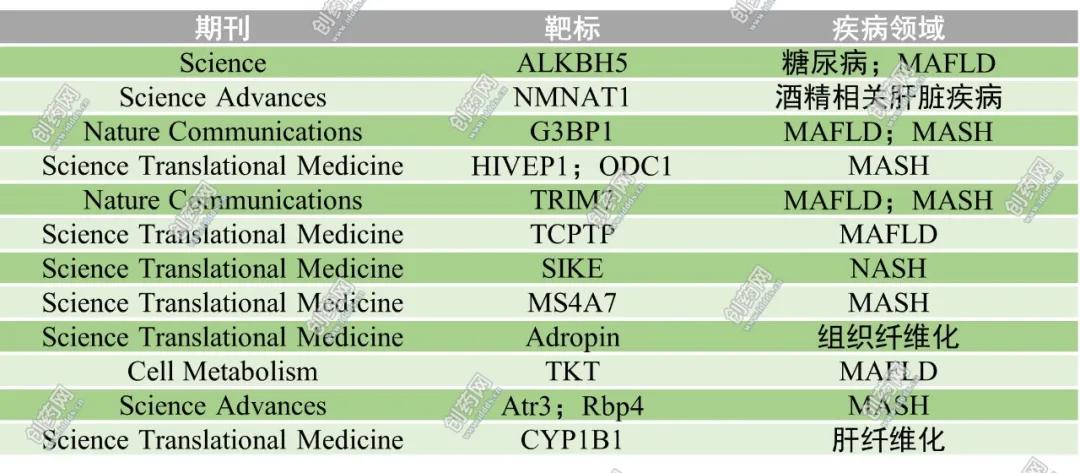
Research on drug targets for liver fibrosis published in journals such as Science and Nature Communications from 2024 to 2025 (Table 2) indicates that numerous targets (e.g., ALKBH5, G3BP1) are located upstream or at central regulatory positions within signaling networks, capable of simultaneously influencing multiple downstream pathways (including metabolic, inflammatory, and fibrotic pathways). These targets span various domains: metabolism (e.g., TKT, Rbp4), inflammation/stress response (e.g., G3BP1, SIKE), and anti-fibrotic mechanisms (e.g., CYP1B1, ODC1). Additionally, epigenetic and post-transcriptional regulation targets such as ALKBH5, the TRIM family, and G3BP1 offer novel perspectives for RNA and small-molecule drug development. Immune-related targets during liver fibrosis progression, including G3BP1, TRIM7, and SIKE, serve as critical mediators linking chronic inflammation to fibrotic advancement, making immune microenvironment remodeling a pivotal emerging strategy against liver fibrosis.
Table 2: New Drug Targets for Liver Fibrosis Research and Development (2024–2025)
Furthermore, liver fibrosis treatment is integrating novel technologies and approaches beyond traditional symptomatic interventions to precisely target key cells and pathogenic mechanisms. For instance, FAP CAR-T cells are employed to eliminate fibrogenic hepatic stem cells (HSCs); gene therapy, mRNA, and siRNA technologies are utilized to correct genetic defects or abnormal protein expression, thereby improving liver fibrosis associated with rare diseases.
(1) In terms of targeting HSCs, the in vivo FAPCAR-T liver anti-fibrosis therapy based on CD5/LNP-FAPCAR-mRNA technology has demonstrated efficacy. FAP serves as a specific target for activated HSCs; by synthesizing FAP mRNA and using CD5-targeted tLNP as a vector, FAPCAR-T cells can be transiently generated in vivo. In MASH model mice, injection of CD5/tLNP-FAPCAR mRNA effectively eliminated fibrogenic activated HSCs and reduced the degree of hepatic fibrosis.
(2) Orcinol carbamoyltransferase (OTC) deficiency is associated with liver fibrosis, with hepatocyte injury being the primary cause. Restoring impaired protein expression through mRNA delivery represents a promising therapeutic strategy. Clinical studies and animal models have demonstrated that OTC deficiency increases the incidence of liver fibrosis. Currently, four drugs targeting OTC deficiency have entered clinical trials: Ultragenyx Pharmaceutical's AAV8 gene therapy DTX301 (Phase III clinical trial), Arcturus Therapeutics' mRNA therapy ARCT-810 (Phase II clinical trial), Precision Biosciences 'gene-editing drug iECURE ECUR-506 (Phase I/II clinical trial), and Bloomsbury Genetic Therapies' BGT-OTCD (Phase I/II clinical trial).
(3) Fazirsiran, a siRNA-based drug, can be used for liver fibrosis associated with α1-antitrypsin deficiency. α1-antitrypsin deficiency-related liver disease (AATD-LD) is a rare hereditary liver disorder caused by mutations in the AAT gene, leading to abnormal accumulation of Z-AAT protein in the liver and subsequent inflammation and fibrosis. Fazirsiran is a small interfering RNA conjugated with N-acetylgalactosamine that targets and degrades the mRNA encoding AAT and its mutant form Z-AAT in hepatocytes, thereby reducing protein synthesis.
epilogue
Currently, the development of novel drugs for liver fibrosis has entered a critical phase characterized by in-depth mechanistic elucidation and technology integration as driving forces. Future efforts will focus on systematically identifying more pivotal druggable targets. Concurrently, building upon small-molecule drugs, diversified technologies—including nucleic acid therapeutics, gene editing, and cell therapies—are advancing synergistically, shifting treatment strategies from single-intervention approaches toward multi-target combination therapy and stratified precision medicine. Notably, breakthroughs in precise regulation of hepatic stem cells (HSCs), remodeling of the immune microenvironment, and correction of genetic etiologies are expected to enhance clinical translation success rates, progressively achieving therapeutic goals that transition from "progression delay" to "fibrosis reversal."
【 reference material 】
1. Wang Mengmeng, Zhu Yuqing, Yang Ximing, Dai Erhei, Gao Chunfang. Expert Consensus on Non-Invasive Experimental Diagnosis of Liver Fibrosis. Laboratory Medicine, 2025,40(7):625-641.
2. Xu Ruifeng, Wang Hongrui, Che Yun, et al. Interpretation of "Cancer Statistics 2025": A Comparative Study on the Epidemiological Characteristics and Long-Term Trends of Cancer in China and the United States. China Journal of Cardiothoracic and Vascular Surgery, 2025,32(4):442-452.
3. Hou M, Gu Q, Cui J,et al. Proportion and clinical characteristics of metabolic-associated fatty liver disease and associated liver fibrosis in an urban Chinese population. Chin Med J(Engl), 2025, 138(7): 829-837.
4. Guo Feiyu, Wang Duowei. Research Progress on the Pathogenesis of Liver Fibrosis and Related Therapeutic Drugs. Advances in Pharmaceutical Science, 2024,48(11):838-848.
5. Huang J, Gong XQ, Zeng Y, et al. Research progress on therapeutic agents for liver fibrosis. Journal of Clinical Hepatobiliary Diseases, 2025,41(10):2141-2148.
6. Rieder F, Nagy LE, Maher TM, et al. Fibrosis: cross-organ biology and pathways to development of innovative drugs. Nat Rev Drug Discov, 2025, 24(7): 543-569.
7. Hammerich L, Tacke F. Hepatic inflammatory responses in liver fibrosis. Nat Rev Gastroenterol Hepatol, 2023, 20(10): 633-646.
8. Hu Y, Yang B, Xiao C, et al. Selective targeting of endothelial and perivascular angiocrine ROCK2 treats liver fibrosis. Cell, 2026 Mar 6:S0092-8674(26)00166-2.
9. Villanueva MT. In vivo CAR-T cells target fibrogenic cells in MASH. Nat Rev Drug Discov, 2026 Mar 11.
10. Clarivate CDDI Database, retrieval date: March 2026.
11. IQVIA database, retrieval date: March 2026.
12. Dingxiangyuan Insight database; retrieval date: March 2026.
13. Public online resources such as Tongxieyi, WuXi AppTec, Singularity Network, and Medicine Magic Cube.
Disclaimer: This article is intended solely for knowledge exchange, sharing, and educational purposes only. It does not constitute commercial promotion and should not be regarded as medical guidance or medication recommendations. In case of any copyright infringement, please contact us for removal.
Our product recommendations:
1.7144-49-2 https://www.bicbiotech.com/product_detail.php?id=6547
2.227776-28-5 https://www.bicbiotech.com/product_detail.php?id=6548
3.6820-93-5 https://www.bicbiotech.com/product_detail.php?id=6549
4.7465-58-9 https://www.bicbiotech.com/product_detail.php?id=6550
5.23749-58-8 https://www.bicbiotech.com/product_detail.php?id=6551