


Metformin is a widely used biguanide-class medication; it serves as a first-line treatment for type 2 diabetes mellitus and is one of the most commonly prescribed drugs worldwide – over 150 million people globally take metformin.
For decades, physicians and scientists have believed that metformin exerts its hypoglycemic effect primarily by acting on the liver to inhibit glucose production, thereby treating type 2 diabetes mellitus.
This biguanide-based medication, used to treat millions of patients worldwide with type 2 diabetes (T2D), primarily acts on the liver to inhibit glucose production. However, a study conducted in mice and led by Northwestern University revealed that this "miracle drug" actually acts mainly in the intestine, preventing elevated blood glucose levels by promoting the utilization of glucose by intestinal wall cells.
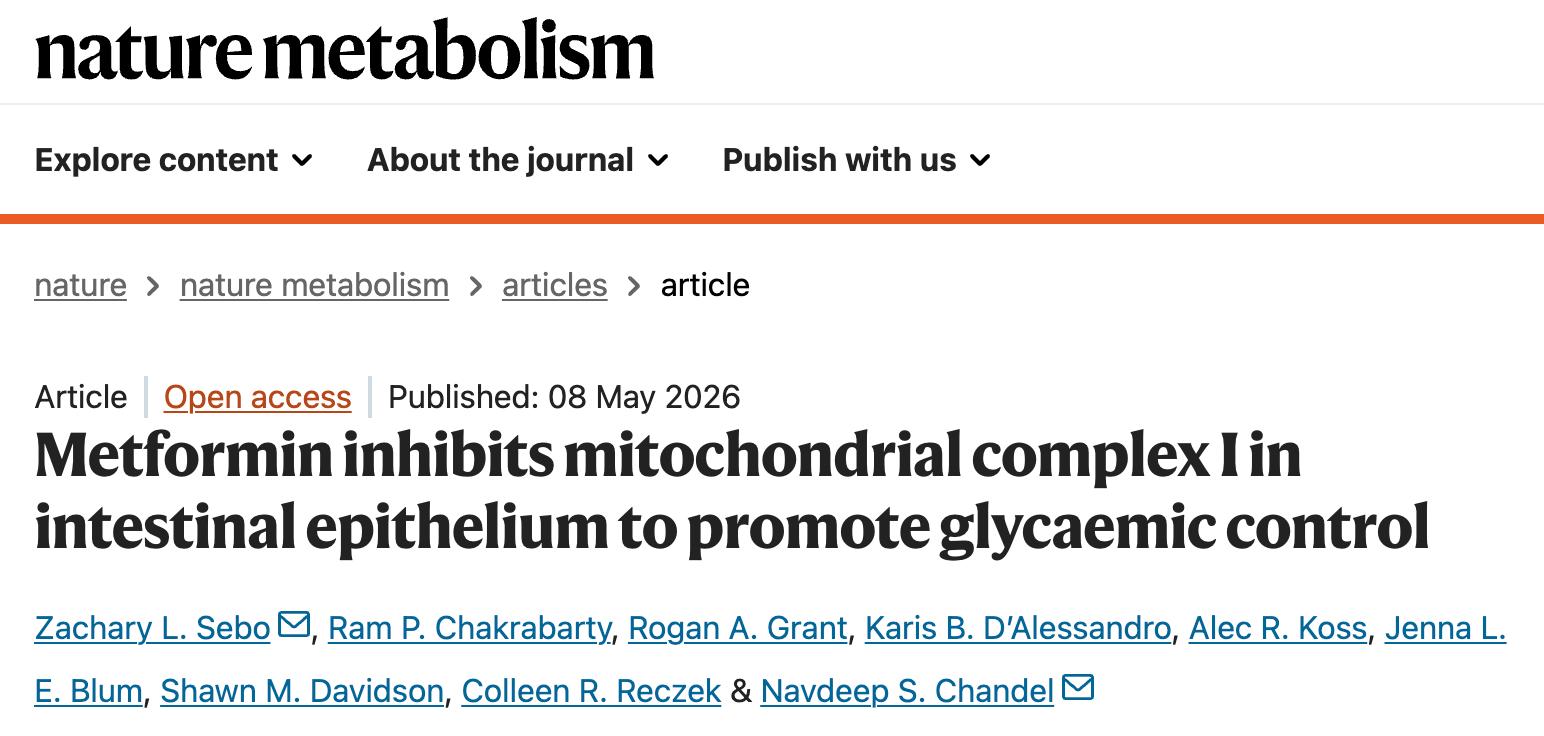
On May 8, 2026, researchers from the Fanburg School of Medicine at Northwest University published a research paper titled "Metformin inhibits mitochondrial complex I in the intestinal epithelium to promote glycemic control" in the Nature subsidiary journal Nature Metabolism.
This groundbreaking study reveals that metformin primarily acts in the intestine by inhibiting mitochondrial complex I in intestinal epithelial cells, thereby promoting glucose utilization and preventing elevated blood glucose levels; it further establishes that mitochondrial complex I in intestinal epithelial cells represents a common and critical therapeutic target for metformin, phenformin, and berberine.
Although metformin is widely used in the treatment of type 2 diabetes mellitus, the underlying mechanisms of its clinical efficacy—including the reduction of postprandial glycemic variability and the enhancement of intestinal glucose uptake—remain incompletely understood.
In this study, the research team utilized publicly available human metabolomic datasets combined with orthogonal genetic approaches in male mice to identify mitochondrial complex I as a key target through which metformin exerts its therapeutic effects in intestinal epithelial cells. This study demonstrates that metformin inhibits the synthesis of citrulline (a metabolite uniquely produced in small intestinal mitochondria) and, by suppressing mitochondrial respiratory chain complex I, increases the levels of growth differentiation factor-15 (GDF15). This inhibitory effect enables the intestine to function as a glucose reservoir, facilitating the uptake of excess glucose and its conversion into lactate and Lac-Phe (synthesized from lactate and phenylalanine).
This mechanism explains how metformin enhances intestinal glucose utilization and reduces blood glucose levels, as well as the phenomenon of metformin-induced citrulline depletion, improvement of postprandial blood glucose levels, and elevation of Lac-Phe and GDF15 concentrations—all of which represent well-established clinical outcomes of metformin therapy.
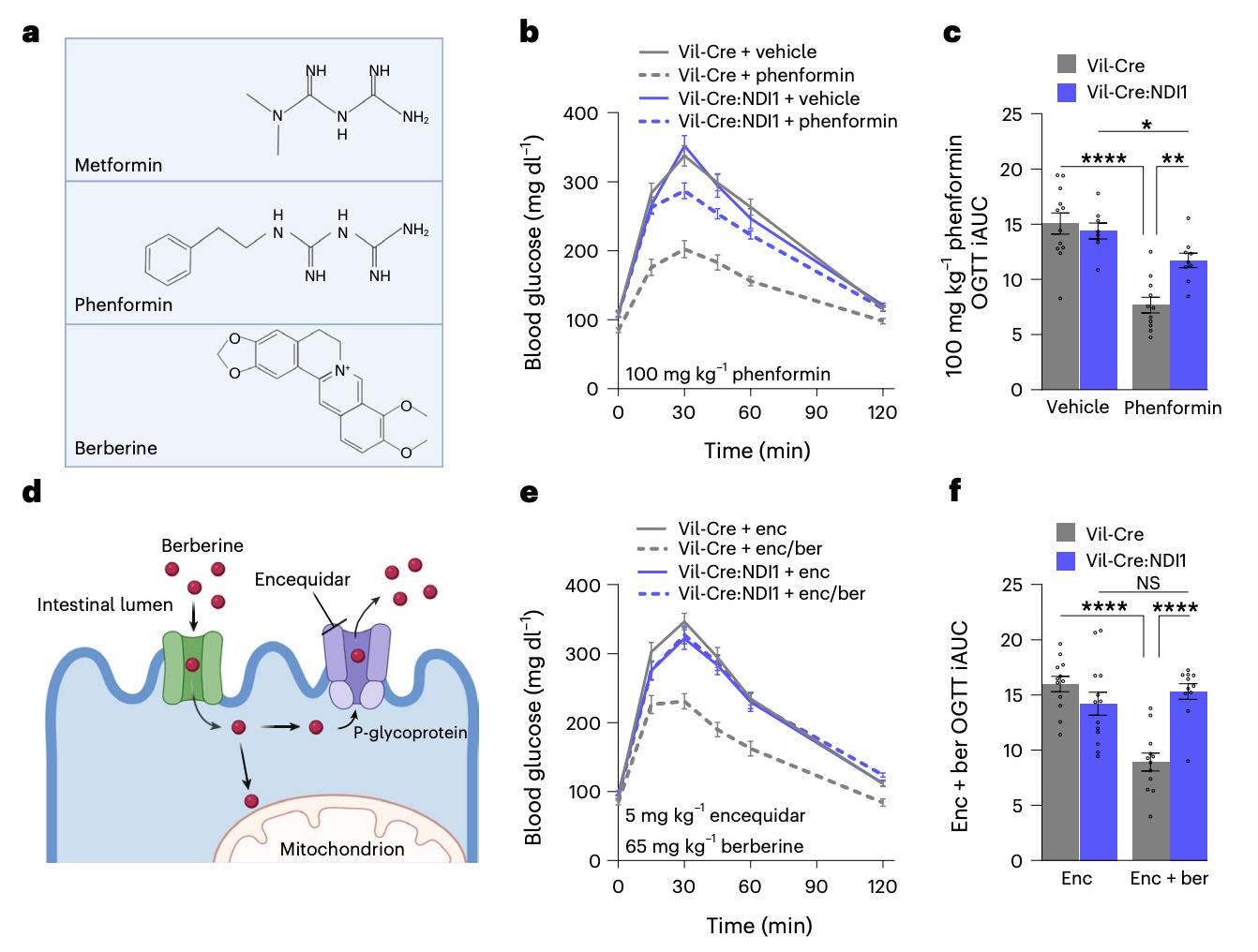
The research team further determined that another biguanide medication, phenformin, as well as the structurally unrelated over-the-counter natural compound berberine (also known as berberine), which is used to treat type 2 diabetes, also lowers blood glucose levels through the same mechanism.
Overall, this study identifies mitochondrial complex I in intestinal epithelial cells as a common and critical therapeutic target for metformin, phenformin, and berberine.
Beyond its hypoglycemic effects, recent studies have demonstrated that metformin may also offer potential benefits for a range of conditions and symptoms, including cancer, obesity, liver diseases, and cardiovascular diseases, among others; furthermore, metformin is currently regarded as one of the most promising drugs for anti-aging and longevity enhancement.
People have long wondered how metformin can exert such a wide range of effects. The research team demonstrated that if this drug acts on a critical node within the cell, it can achieve this – and the mitochondria represent precisely such a critical node within the cell. Therefore, by targeting and inhibiting mitochondrial complex I, metformin suppresses mitochondrial function, providing a new explanation for why metformin can exert such a broad array of potential effects.
Paper link:
https://www.nature.com/articles/s42255-026-01530-y
Disclaimer: This article is intended solely for knowledge exchange, sharing, and educational purposes only; it does not constitute commercial promotion nor should it be construed as medical advice or recommendations regarding medication use. If this article involves any copyright infringement, please contact us for removal.
Recommended products from our company:
1.171429-39-3 https://www.bicbiotech.com/product_detail.php?id=6557
2. 133728-31-1 https://www.bicbiotech.com/product_detail.php?id=6558
3. 578020-05-0 https://www.bicbiotech.com/product_detail.php?id=6559
4. 72076-09-6 https://www.bicbiotech.com/product_detail.php?id=6560
5. 11077-24-0 https://www.bicbiotech.com/product_detail.php?id=6561