


文章来源: EngineeringForLife
体外生物学模型对于广泛的生物医学研究至关重要,包括药物开发、病理学研究和个性化医疗。作为体外3D生物模型的潜在变革范例,器官芯片(OOC)设备已得到广泛开发,通过应用生命科学原理并利用微米和纳米级工程来概括器官的复杂架构和动态微环境能力。OOC设备的关键功能是支持对活体组织及其微环境进行多方面的及时分析,因此智能OOC系统受到了越来越多的关注。
近日,来自加拿大多伦多大学的Xinyu Liu联合西安交通大学的Jiankang He探讨了智能OOC (iOOC)系统的最新进展,与OOC设备集成的传感器连续报告细胞和微环境信息,以进行全面的原位生物分析(图1)。iOOC系统中的多模态数据可以支持iOOC模型的闭环控制,并为不同的应用提供全面的生物医学见解。
相关综述论文以“Advancing Intelligent Organs-on-a-Chip Systems with Comprehensive in situ Bioanalysis”为题于2023年9月9日发表在《Advanced Materials》上。
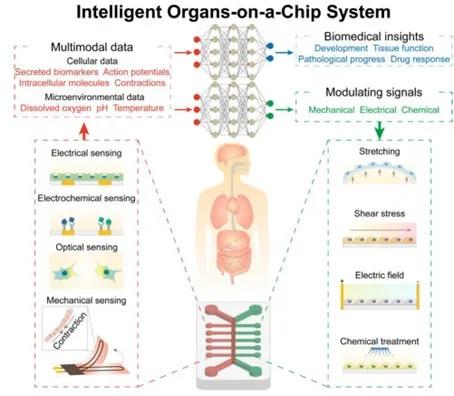
图1 iOOC系统示意图,iOOC系统由原位传感、数据处理和动态调制组件组成,以实现全面的生物分析
1. OOC设备向iOOC系统的演进
OOC技术已得到广泛开发,以解决传统2D细胞培养的局限性,例如无法构建异质细胞群和细胞外基质环境的3D组织特异性结构。OOC技术源于微流控与组织工程的融合(图2)。虽然组织工程的最初目标是再生人体组织,但该技术已经产生了各种构建3D组织结构的方法,这些结构可能由细胞外基质材料、支架结构以及各种细胞的预定义组成和排列组成。设计OOC设备的主要范式是重建特定组织的组成和微环境的关键方面,微流控和组织工程技术为OOC的发展带来了三个关键优势。
由于传感器和OOC设备之间的集成,智能OOC (iOOC)系统将兴起(图1):不同的传感单元不断报告OOC模型的状况,并使用询问模型的算法处理数据流或使用OOC设备中的有源组件对其进行调制。iOOC系统可以建立更可控、更准确、更可靠的体外模型,并可以加深对生理和病理活动的理解。
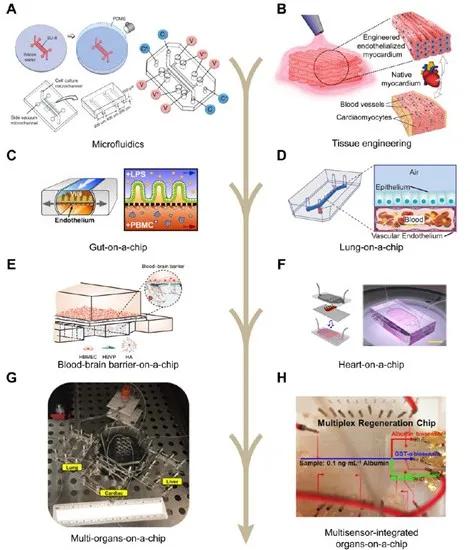
图2 器官芯片系统的演变
2. iOOC系统的原位传感
与iOOC系统集成的各种传感单元收集关键的生物信息并生成为智能功能奠定基础的数据流。在本节中,作者概述了将传感单元集成到iOOC系统中的技术,然后分析传感单元的集成方法。
(1)iOOC系统的传感技术
已经建立了许多方法将细胞和微环境的属性转换为可以用电路轻松处理的电信号。此部分,主要总结了基于电生理信号记录以及电阻和阻抗测量的iOOC系统的原位电传感技术(图3A)。电化学生物传感器将与电化学反应相关的生物信息转化为可测量的电信号,例如电导、电阻和电极表面电容的变化(图3B)。一般来说,电化学生物传感机制提供高特异性、宽动态范围、易于定量的电输出以及方便的集成。它们通常适用于检测指向多种信息的分子生物标志物。特别是,集成在器官芯片上的电化学生物传感器可以以多重方式检测多种生物标志物。此外,还有iOOC系统的光学传感技术、机械传感技术均对其进行了详细说明。
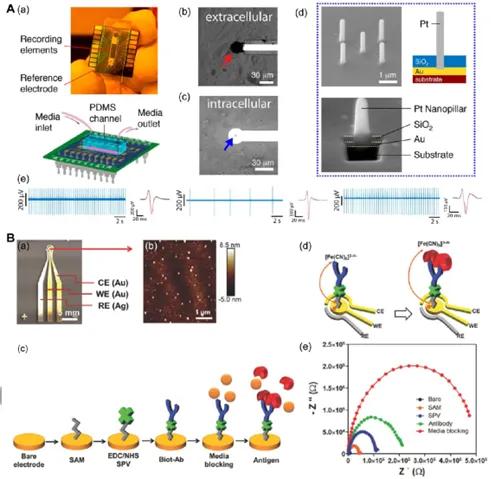
图3 iOOC系统生物传感的电传感机制
(2)将传感器集成到iOOC系统中的策略
传感单元应与iOOC系统无缝集成,以持续生成支撑系统智能的有价值的数据。为了实现高性能监测,传感机制应与目标相匹配,并且传感器的功能在微流体、动态和组织涉及的微环境中应具有鲁棒性,因为可能存在阻尼效应、改变离子分布和其他干扰。
人们提出了多种策略将传感单元集成到iOOC系统中。主要有:
(i)与组织直接结合:传感结构可以与体外活组织或类器官建立接触和整合,以连续记录反映这些模型生理状态的各种数据。作者总结了生物传感单元与活体组织集成的形式,包括离散探针、2D接触、3D包裹和3D嵌入(图4、图5)。
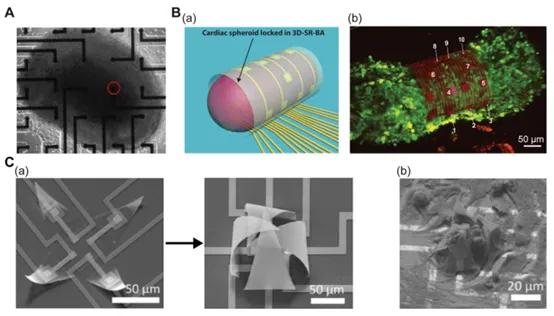
图4 2D接触和3D包裹形式的传感器-组织集成
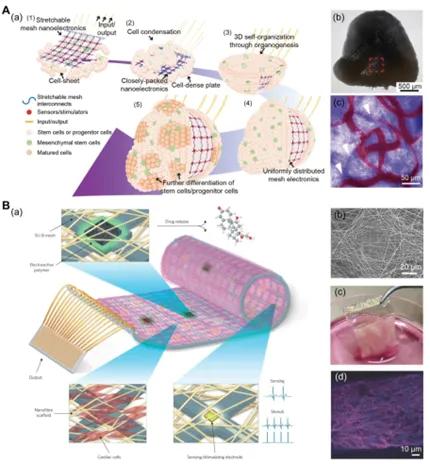
Figure 5 3D The tissue sensor integration in the embedded form
(ii) Other integration strategies:
The sensing unit can be placed in a microfluidic environment without direct contact with the tissue, and a typical method is to incorporate the sensing unit into a microfluidic channel or chamber to monitor the condition of the culture medium; moreover, the sensing unit can be movable to detect local tissue or culture medium.
(3) Sense the multimodal information in the iOOC system
Tissue models in iOOC systems constitute the center of complex cellular information valuable for biomedicine. In this section, the authors summarize and discuss the interpretation of cellular information regarding biomarkers, cell-cell connectivity, bioelectrical activity, and biomechanical activity (Table 1).
Table 1 Sensing cellular information in the iOOC system (in part)
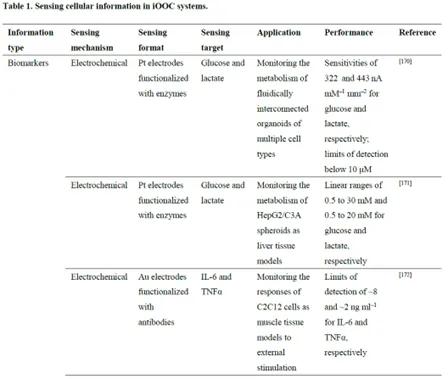
Accurate monitoring and control of the cell culture microenvironment is critical to the success of in vitro biological models, as changes in the microenvironment can affect the metabolic and functional expression of cells. In order to predict cell or tissue responses in vivo as accurately as possible in vitro, various microenvironmental information such as oxygen content, pH and temperature need to be monitored in the iOOC system (Table 2).
Table 2 Sensing Microenvironment information in iOOC system (partial)

3. Data processing of the iOOC system
The role of data processing techniques in the iOOC system can be considered from two aspects. First, data processing can be used to adjust the drive components in the iOOC system to ensure accurate modulation and make the system more automated. Second, data processing can lead to more biomedical insights into developmental, physiological, and pathological processes. In this section, the authors present the methods that can be used to process the bioanalytical data of the iOOC systems, including image analysis, sensing data interpretation, automation, and numerical simulations.
(1) Data processing technology of the iOOC system
As an important topic in artificial intelligence and computer science, machine learning algorithms interpret information directly from data without relying on predetermined models (e. g., specified standards and calibration curves), and are often used for classification, regression, and clustering (Figure 6A-D). Classification essentially assigns data points to discrete categories, regression generates continuous values as output, and clustering essentially predicts the grouping of similar data points in the dataset. These algorithms improve their performance as the data volume increases.
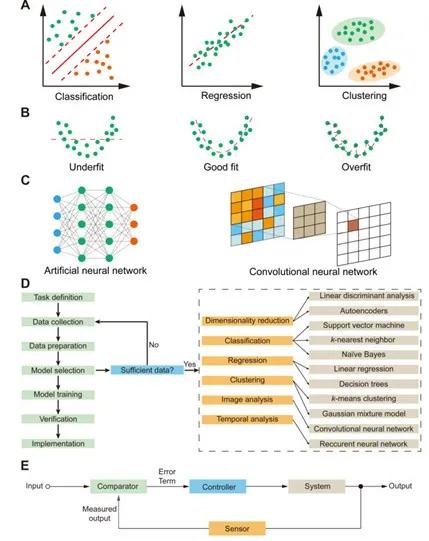
Figure 6 Data processing technology of iOOC system
(2) Numerical simulation technology of iOOC system
Numerical simulation techniques such as finite element method, lattice Boltzmann method, and smooth particle hydrodynamics can be used to deeply understand the physical and chemical environment of iOOC systems. Numerical simulation techniques help eliminate the need for repeated experimental measurements (e. g. shear stress and oxygen distribution) and allow optimization of iOOC systems at a lower cost. Furthermore, these techniques can improve the understanding of the physical phenomena and organizational behaviors in the microenvironment of iOOC systems.
(3) Closed-loop control technology of iOOC system
To achieve higher levels of quality control and accurately adjust model conditions in iOOC systems, closed-loop control (also known as feedback control) technology that relies on sensor data flow can be utilized. In a closed-loop control system widely used in engineering equipment, the actual output signal is measured and compared with the required output signal to calculate the error term, which is used to generate a control signal for adjusting the input (Figure 6E).
4. Dynamic modulation of the iOOC system
Biological tissues are sensitive to various external stimuli in their microenvironment, and an increasing number of studies demonstrate that various cell-ECM and cell-cell interactions can lead to a wide range of tissue-specific phenotypes. The iOOC system provides new opportunities to deepen the understanding of such complex interactions, as regulatory components integrated into these systems can be deployed to control the microenvironment and tune tissue models to represent physiological and pathological conditions. Certain components in the iOOC system can perform integrated functions of sensing and modulation, supporting a bidirectional in situ representation of the iOOC model to reveal deeper biomedical insights.
(1) Mechanical loading of the iOOC system:Application of mechanical loading in an OCC system with a dynamic cell culture environment is essential for establishing the physiological microenvironment of the tissue class in vitro. In order to generate dynamic stretching and compression, specialized mechanical structures and driving mechanisms are often required, and shear stress can be precisely regulated by controlling fluid dynamics in OOC devices (Figure 7).
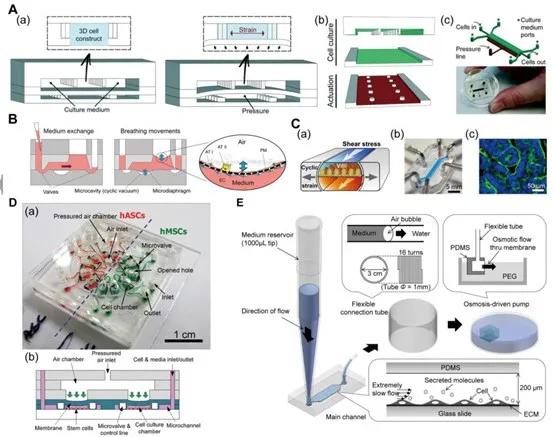
Figure 7 Schematic of mechanical modulation in the iOOC system
(2) Electrical stimulation in the iOOC system: Multiple cell behaviors are regulated by endogenous currents and potentials, so electrical stimulation is often required in the iOOC system. In order to generate controlled electrical stimulation for specific purposes, the corresponding electrical elements need to be carefully configured. A number of OOC devices combining electrical stimulation are designed to study the muscle, heart, and nervous system (Figure 8A).
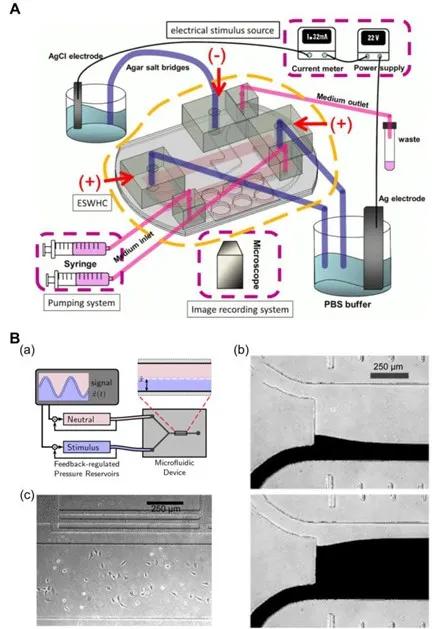
Figure 8 Schematic of electrical and chemical modulation in iOOC systems
(3) Chemical treatment of iOOC systems:An accurate in vitro physiological model usually requires a temporally and spatially controllable chemical environment. With microfluidic technology, chemical interactions and distribution can be precisely controlled within the adjustable fluid flow rate throughout the device to match the same scale as the cellular components. Chemical signal generators can be used in microfluidic devices to introduce time-changing chemical signals to the cell to study the way of tissue response to dynamically changing chemical signals (Figure 8B).
5. Future outlook and conclusions
(1) Sensing unit
Future development of biosensing units in iOOC systems can fully leverage emerging technologies and strategies in the field of biosensors and bioelectronics. Driven by advances in sensing materials and manufacturing methods, biosensors and bioelectronics are gaining increasing capabilities, such as high sensitivity, high miniaturization, and improved mechanical compatibility with living tissues. Therefore, they are more suitable for integration into iOOC systems.
(2) Data processing
As the iOOC systems continue to evolve, a wide variety of tissue models will be cultivated, maintained, monitored and regulated, which will constitute an important source of valuable biomedical data. For example, the iOOC system can form tissue models with different cellular compositions and microenvironments to simulate specific disease conditions, and the iOOC system can support various continuous biological analyses of different regions of the tissue model to detect spatial heterogeneity. Furthermore, multimodal sensing data from iOOC systems can be associated with multi-omics data from tissue models to yield a deeper and more comprehensive understanding of biological mechanisms.
(3) Adjustment unit
Regulatory units in iOOC systems can seek for deeper tissue integration and more efficient perturbations such as, soft bioelectronic components, novel micrometers and nanoscale structures.
(4) Intelligent chip human system
The advent of human chip-on-chip devices connecting miniature models of different organs offers the possibility to study the complex interactions of human organs and gain systematic insights into physiology and pathology. When iOOC systems integrate human chip models, in situ bioanalysis supported by multiple sensors can enhance these models to their full potential.
(5) Standardization of the iOOC system
Quality control has been regarded as a key task by the OOC technology research and development community, and standardization of OOC equipment is very needed to have a significant impact on clinical practice and the pharmaceutical industry. The development of iOOC systems may have multifaceted effects on standardization.
Article source:
https://doi.org/10.1002/adma.202305268
Our product recommendation:
1.83674-70-8 https://www.bicbiotech.com/product_detail.php?id=5530
2.677702-58-8 https://www.bicbiotech.com/product_detail.php?id=5531
3.259209-22-8 https://www.bicbiotech.com/product_detail.php?id=5532
4.155601-65-3 https://www.bicbiotech.com/product_detail.php?id=5278
5.1227599-35-0 https://www.bicbiotech.com/product_detail.php?id=5534